Learning objectives
In this module, you will strengthen your media literacy skills by learning how to evaluate sources and assess their credibility. You will practice lateral reading using examples from the web and social media, and explore how confirmation bias and emotions influence the way information is consumed and shared. By the end of this module learners will be able to:
- Understand media literacy and information evaluation importance.
- Apply media literacy skills to real examples related to migration disinformation.
The importance of sources
Sources are where information comes from. They can be official institutions, journalists, experts, organizations, or people who witness an event. Understanding the source of a piece of information helps us judge how trustworthy it is. Reliable sources usually explain where their information comes from, use evidence, and correct mistakes when they happen. On the other hand, unreliable sources may hide who they are, exaggerate facts, or share information without checking it first.
At this moment, sources are more important than ever because we receive information constantly through social media, messaging apps, and digital platforms. News, images, videos, and voice messages can spread in seconds and reach thousands of people. In these spaces, false information can look very convincing and is often shared without context or explanation. Algorithms also tend to show us content that creates strong emotions, making it even harder to stop and think about whether it is true or where it comes from.
For this reason, activating critical thinking is essential. This means slowing down and asking ourselves key questions before believing or sharing any content. Who created this information? Why was it shared? Is it coming from an official or trusted source? Can the same information be found in other reliable media? By taking a moment to reflect and verify, we protect ourselves and others from misinformation and help create a more informed and responsible digital environment.
5 things to pay attention to not fall for disinformation
Trust only official sources:
- Be careful with photos and videos taken out of context: the image or recording you've received may have nothing to do with the event in question. It could have been captured in a different place and at a different time.
- When in doubt, don't share: it's always important to make sure content is real before sharing it, but in crisis situations this is essential to avoid making the situation worse.
- Rely only on official sources: we know that in stressful situations you just want someone to keep you informed. Make sure the information comes from an official source and not from a WhatsApp contact.
- Who is publishing it?: pay attention to the outlet spreading a specific piece of information. Is it reliable? Do you know it? What are other media saying about it?
- Don't let them play with your emotions: it's also common for spreaders of misinformation to appeal to emotions in highly dramatic situations. Don't let yourself be carried away, and don't share it if you suspect it might be misleading you.
Lateral reading
Lateral reading is a simple way to check information by looking outside the content you are reading. Instead of staying on one post, website, or message and trusting what it says, you open new tabs or search elsewhere to see what other reliable sources say about it.
For example, if you see a claim on social media, lateral reading means you check who is behind it, whether trusted media or official sources report the same information, and what context is missing. You do not spend a lot of time analyzing the design or details of the original page. You quickly compare it with other sources.
This habit helps you avoid disinformation because false content often falls apart when you look at it from the side. If a claim is true, it will usually be confirmed by several reliable sources. Lateral reading helps you make better decisions before believing or sharing information.
PDF Examples of Lateral Reading
Cognitive Biases and the role of emotions
We are not as rational as we may think we are. Psychology and behavioral science have shown that all people use mental shortcuts, known as cognitive biases, to make decisions quickly. This idea comes from researchers like Daniel Kahneman and Amos Tversky, who explained that our brains often rely on intuition, habits, and emotions instead of careful analysis. These biases help us save time and effort, but they can also lead us to make mistakes, especially when we process a lot of information very fast.
Knowing that these biases exist helps us develop critical thinking. When we understand that our first reaction may be influenced by fear, anger, urgency, or by information that confirms what we already believe, we can pause and question it. This pause allows us to check sources, look for context, and avoid sharing false or misleading content. Being aware of our biases does not make us immune to disinformation, but it does give us better tools to recognize it and reduce its impact.
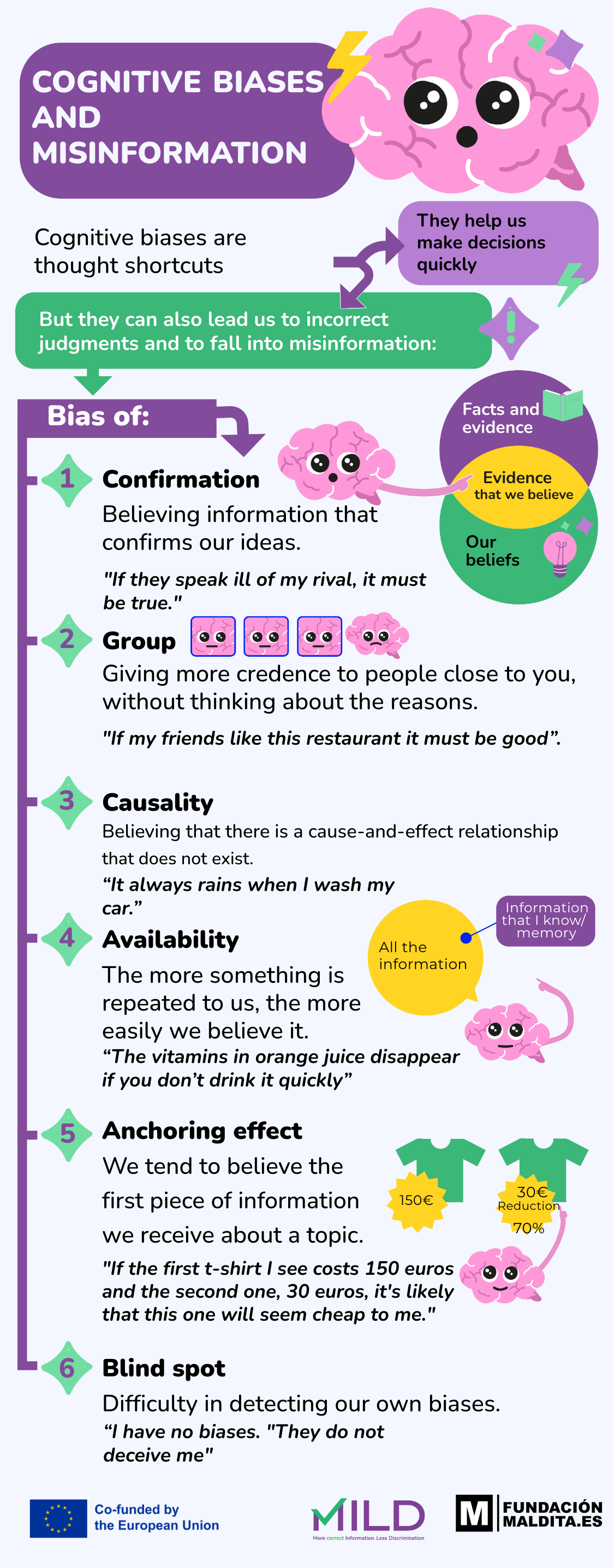
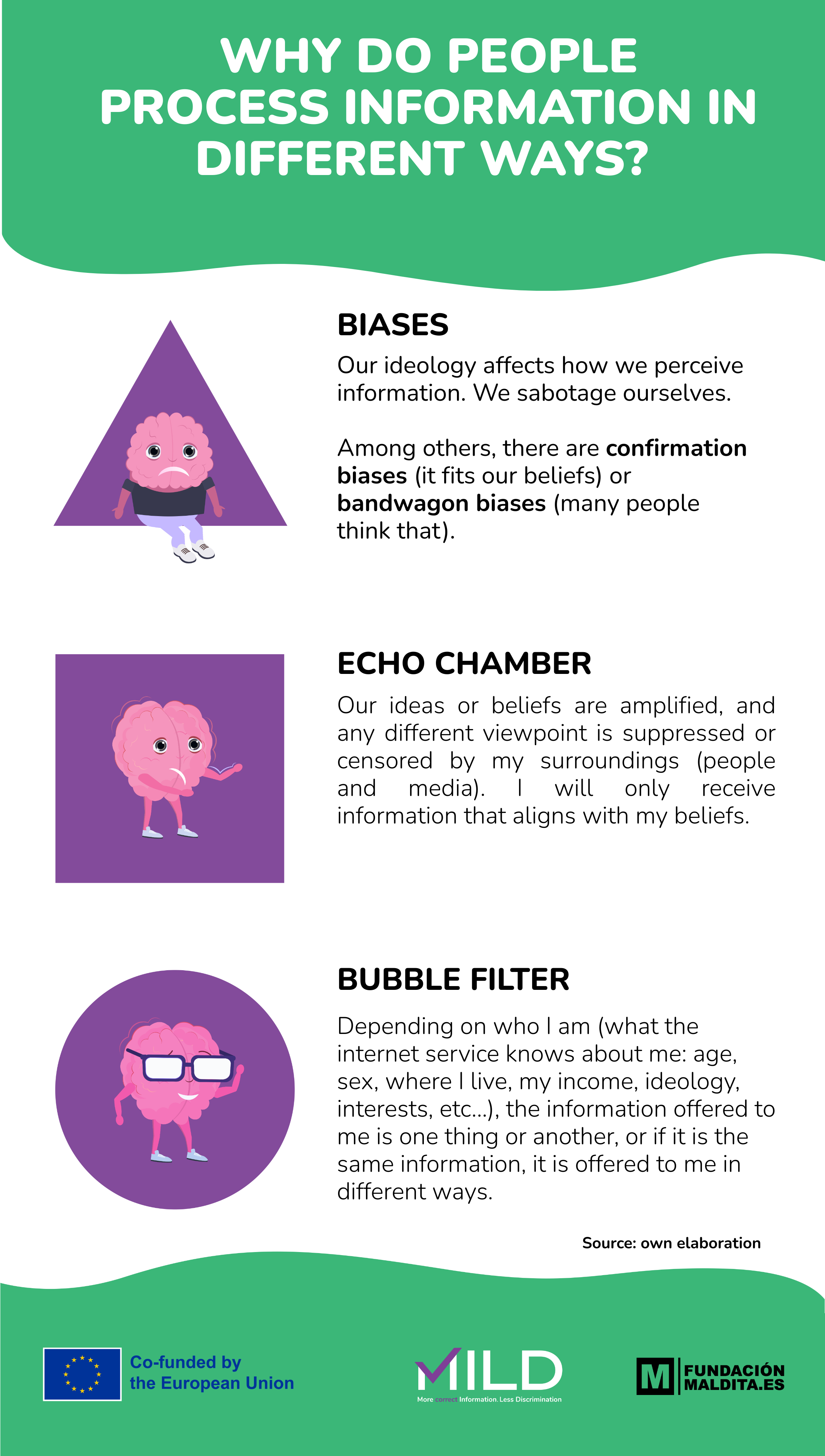
Confirmation bias strongly influences disinformation about migrants. When people already have negative ideas or fears about migration, they are more likely to believe contents that shows migrants as dangerous, criminal, or responsible for social problems. Even when these claims are false or exaggerated, they can feel true because they fit with what the person already thinks, so they are accepted and shared without being checked.
At the same time, information that challenges these beliefs is often ignored or distrusted. Data that shows the real situation, official statistics, or stories about migrants' positive contributions may be dismissed simply because they do not match existing opinions. Social media can make this worse by showing people more of the same type of content, which reinforces one-sided views and repeats misleading narratives.
Understanding confirmation bias helps us be more careful with this kind of content. If we recognize that our beliefs can affect how we judge information, we can stop and ask where the information comes from and whether it is supported by evidence. This habit of questioning and checking reliable sources is key to avoiding disinformation and having a more informed and fair conversation.
PDF Disinformation and Emotions
Downloadable Resources
Supplementary materials to strengthen your media literacy skills.